FREE SHIPPING On Orders Over US$200

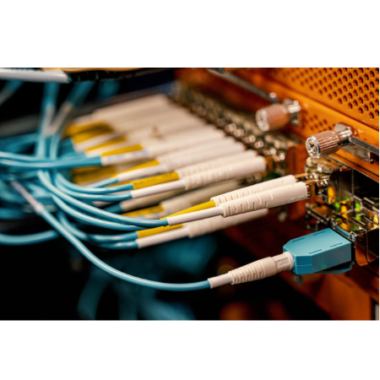
Routing fiber through a crowded patch panel often means working around narrow corners and limited space behind connectors. Bend insensitive fiber can reduce bending-related signal loss in these conditions, but it does not remove the need for careful installation. Comparing it with conventional fiber—and checking the limits of the complete cable—helps you decide when it offers a practical advantage.
Normal Fiber vs. Bend Insensitive Fiber
In this comparison, “normal fiber” means conventional fiber without a specific bend-insensitive design. It is a general description, not a formal fiber classification.
Bend insensitive fiber is designed to keep more light guided through the fiber when it bends. Its main advantage is reduced bending-related loss, rather than an automatic increase in transmission speed or distance.
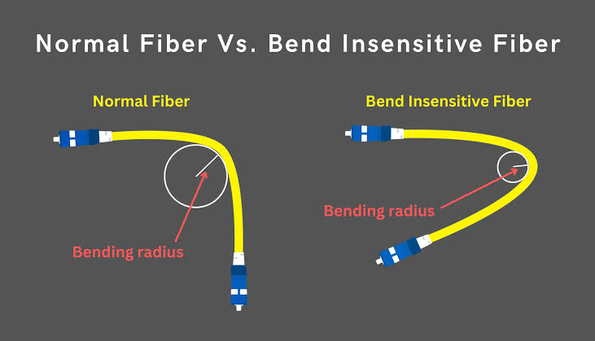
| Comparison point | Normal fiber | Bend insensitive fiber |
|---|---|---|
| Bending-related loss | Generally more sensitive to tight bends | Designed to reduce loss under specified bending conditions |
| Routing requirements | Requires suitable space to maintain the cable’s bend limits | Can offer more routing flexibility when the finished cable specifications allow it |
| Typical application fit | Routes with adequate space and controlled bends | Compact enclosures, dense patching areas and other restricted routes |
| Mechanical protection | Must be protected from pulling, crushing and sharp folds | Still requires protection from the same mechanical stresses |
| Performance verification | Must meet the link’s optical requirements | Must meet the same link requirements; the label alone does not confirm performance |
Compare equivalent fiber types under the same wavelength, bend radius and test conditions. Single-mode and multimode products should not be treated as interchangeable simply because both are described as bend insensitive.
For more background on the available types, see our introduction to bend-insensitive fiber patch cords.
When Bend Insensitive Fiber Makes Sense
A bend insensitive fiber cable is worth considering when the planned route contains limited space for broad curves. Examples include crowded patch panels, compact wall enclosures and cable managers with frequent direction changes.
However, first check whether the route itself can be improved. Moving a cable guide or choosing a more suitable patch-cord length may remove an unnecessary tight bend.
Conventional fiber can remain suitable where the installed cable stays within its specifications and the link meets its performance requirements. There is no need to replace a functioning cable solely because a bend-insensitive option is available.
The choice should follow the installation conditions, not the assumption that one label is always better.
Bend Insensitive Fiber Still Has a Minimum Bend Radius
The minimum bend radius is the tightest curve permitted under specified conditions. A smaller radius means a tighter curve, so the installed cable must remain at or above its stated minimum.
The important distinction is between the fiber inside the cable and the finished cable assembly.
A fiber specification describes performance under defined conditions. The complete patch cord also contains protective materials, a jacket and connector assemblies, which influence how it can be routed and handled.
When checking the fiber patch cable bend radius, use the datasheet for the exact product. If separate limits are listed for installation and stationary use, follow the appropriate one. Do not apply a stationary bend limit while the cable is under pulling tension.
A small bend radius quoted for a fiber grade should not automatically be used as the installation limit for every cable containing that fiber.
What to Check Before Choosing a Cable
Before ordering a bend insensitive fiber optic cable, confirm that it meets both the optical requirements of the link and the physical requirements of the route.
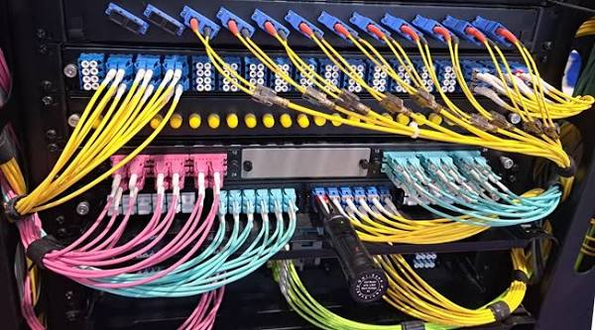
Focus on four details:
- Fiber specification: Match the required single-mode or multimode type and confirm the stated bend-insensitive properties.
- Finished-cable bend limits: Check the permitted radius and any installation conditions.
- Connector compatibility: Confirm connector type, polish and polarity where applicable.
- Length and jacket: Choose a suitable length and a jacket appropriate for the installation environment.
An OS2, OM3 or OM4 designation alone does not tell you the complete cable’s minimum bend radius. Likewise, a thinner jacket does not automatically mean that a cable can tolerate a tighter curve.
When reviewing Fiber-Life fiber optic cables, compare the specifications of the individual assembly. Request confirmation if the required bending information is missing.
Route Carefully and Verify the Result
Leave room for a gradual curve behind each connector rather than pulling the cable sharply to one side. Store excess length in broad loops, avoid compressing bundles with tight restraints, and check that cabinet doors or sliding trays cannot pinch the cable.
Once routing is complete, carry out the tests required for the link. An active connection alone does not confirm that the installation meets its loss budget. Where needed, follow an appropriate fiber insertion-loss measurement procedure.
Bend insensitive fiber offers useful tolerance when space is restricted. The best choice is still a cable whose documented limits fit the route—and whose performance is verified after installation.