FREE SHIPPING On Orders Over US$200

Choosing an industrial fiber optic cable involves two questions: will it support the optical connection, and will it withstand the conditions along its route? OS2 fiber helps answer the first question, but the cable’s construction and terminations determine much of the second. A protected cabinet connection and an exposed factory link may both use OS2 while requiring different jackets, mechanical protection and connector arrangements. Understanding that distinction makes an industrial cable easier to specify.
What OS2 Fiber Tells You About the Connection
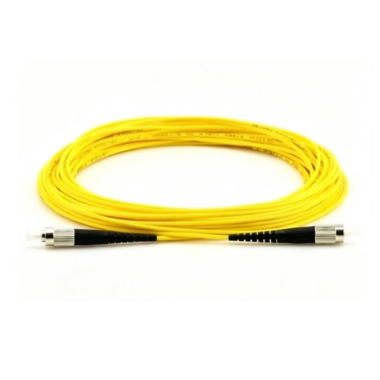
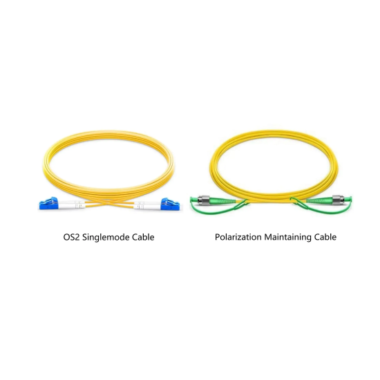
OS2 is a single-mode optical fiber cabling category. It is used in applications such as building backbones, campus connections and industrial networks with compatible single-mode optical equipment.
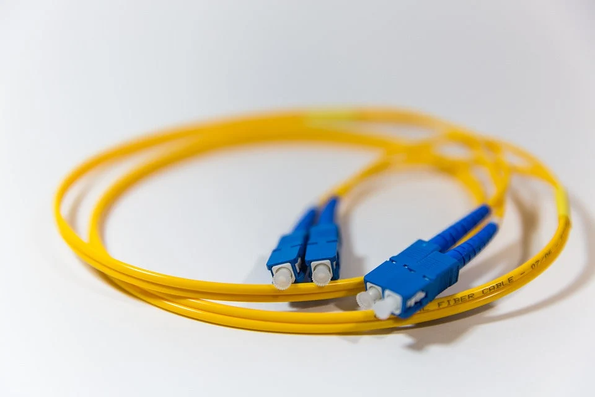
An OS2 single mode fiber cable does not have one fixed transmission speed or maximum distance. Those depend on the transceivers and the complete optical path, including losses from the fiber, connectors and splices.
Start by checking the equipment’s fiber requirements, supported distance and permitted link loss. Then confirm that the proposed cable assembly matches the interfaces at both ends.
Once the optical requirements are established, assess the physical conditions in which the industrial cable will operate.
What Makes an Industrial Cable Suitable for Its Environment?
The OS2 designation does not specify jacket durability, water resistance or suitability for repeated movement. Those characteristics come from the finished cable’s design and documented ratings.
Different components perform different roles. The outer jacket provides protection from the surroundings, strength members help carry tensile loads, and armor can add resistance to certain mechanical stresses.
An armored OS2 fiber cable may therefore be appropriate where a standard indoor patch cord lacks sufficient protection. However, armor alone does not establish suitability for direct burial, vehicle traffic or continuous flexing.
The same applies to jacket materials. A TPU jacket can be selected for its mechanical properties, but resistance to a particular oil or chemical must be checked against the product specification. A material name does not describe every exposure condition.
The useful question is not simply whether a cable is called “industrial,” but whether its stated capabilities match the installation.
Assess the Entire Cable Route
Conditions may change along a single link. A cable might begin inside a cabinet, pass through an exposed production area and terminate in another enclosure.
Assess those sections individually. Pay particular attention to transitions, cable entries and places where the assembly could rub against an edge or experience tension.
| Condition along the route | Information to confirm |
|---|---|
| Abrasion or contact with edges | Jacket abrasion resistance and any additional routing protection |
| Pulling or possible compression | Permitted tensile and crush loads, with approved installation methods |
| Oil or chemical exposure | Compatibility with the specific substance and exposure conditions |
| Moisture or outdoor weather | Water resistance, UV suitability and protection at cable entries |
| High or low temperatures | Installation, operating and storage temperature ranges |
| Repeated movement or reeling | Suitability for the motion, bend limits and relevant test conditions |
| Direct burial | Explicit approval of the selected cable for direct burial |
Building fire-performance requirements also need to be considered where applicable. Mechanical durability does not replace the required installation rating.
For example, an OS2 fiber cable used outdoors may be intended for a protected conduit. That does not automatically make it suitable for direct burial. Specify the actual installation method when requesting a recommendation.
Protect the Industrial Cable at Its Connection Points
A reinforced cable jacket does not protect an exposed optical connector end face. The termination points need to be assessed separately.
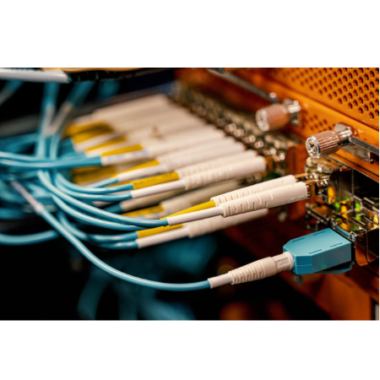
Standard LC or SC connectors may be suitable inside an appropriately protected enclosure. Exposed connections may require a sealed connector system, a protective housing or both.
Where an IP rating is specified, confirm which assembled configuration it covers. The correct mating components, seals and installation procedure may be necessary to achieve that protection. An ordinary dust cap should not be treated as a weatherproof closure.
Also check optical compatibility, including connector type and polish. Environmental protection cannot compensate for an incorrect mating interface.
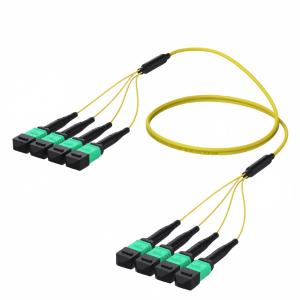
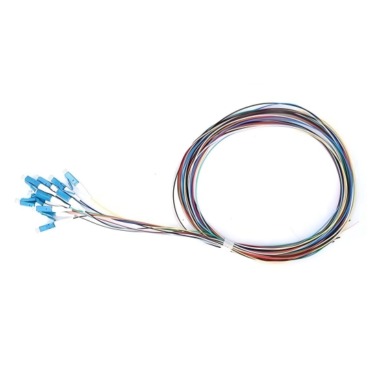
On a pre-terminated industrial cable, the short branches leading to individual connectors may be less protected than the main cable. Support these breakout sections and keep external loads away from the connector bodies.
Distinguish Fixed Installation from Repeated Movement
A cable that bends easily during installation is not necessarily designed to move continuously.
For a fixed route, confirm the finished assembly’s installation and operating bend limits. Where separate loaded and unloaded limits are provided, follow the one that applies to the task.
For moving machinery or repeated deployment, ask whether the industrial cable is designed for that specific use. Relevant information may include flexing, torsion or reeling test conditions. A general description such as “flexible” is not enough to establish suitability.
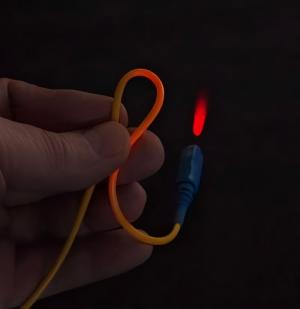
Some OS2 assemblies use bend-insensitive fiber to reduce bending-related optical loss. This does not remove the mechanical limits of the jacket, armor or termination points.
Similarly, placing a cable on a reel provides storage and handling convenience. The cable itself must still be suitable for the intended deployment and retrieval cycle.
Select an OS2 Industrial Cable from Confirmed Requirements
With the route and optical requirements defined, compare them with a specific assembly.
Fiber-Life’s industrial OS2 fiber cable is listed with an armored construction, a TPU jacket and configurable fiber counts and connector options. These features provide a starting point for selection; the chosen configuration still needs to match the intended application.
When requesting a quotation, provide the required length, fiber count and interfaces together with a short description of the environment. State whether the cable will remain fixed, be handled occasionally or move repeatedly.
For unusual exposure conditions, request supporting specifications rather than relying on broad terms such as “rugged” or “harsh environment.” Confirm the exact assembly being supplied, particularly when connector and breakout options vary.
After installation, inspect the cable and perform the optical tests required for the link. These checks assess the installed connection, while environmental suitability depends on the product’s documented ratings and correct use.
The right industrial cable combines compatible OS2 fiber with construction and terminations suited to the route. Confirming both helps turn a general fiber requirement into a practical product specification.