FREE SHIPPING On Orders Over US$200

A polishing film marked “1 µm” may look like a straightforward purchase. But the particle size does not tell you whether it suits your connector, polishing machine or production process.
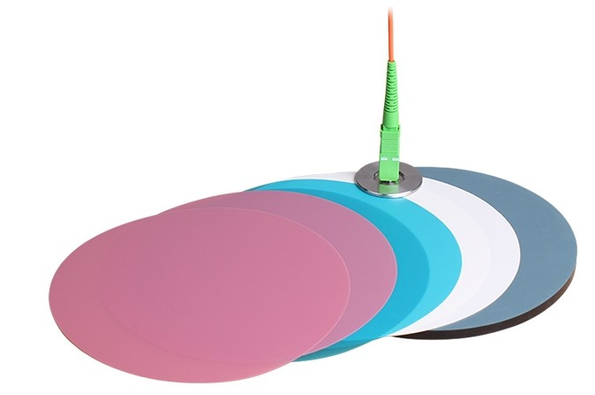
To choose fiber optic polishing film, start with the material being polished and the job the film must perform. Then check the abrasive, grit size and physical format. This approach helps narrow the options without relying on color or particle size alone.
What Are You Trying Fiber Optic Polishing Film to Remove or Finish?
Connector polishing can involve removing excess epoxy, shaping the ferrule and finishing the fiber end face. These tasks require different levels of material removal and surface control.
Before comparing films, identify:
- The ferrule material: For example, zirconia ceramic, metal or a composite material.
- The connector construction: A single-fiber ferrule and a multi-fiber ferrule may require different processes.
- The polishing stage: Epoxy removal, shaping or final finishing.
- The required result: The surface, geometry and optical requirements for the finished connector.
If you already have an approved polishing procedure, use its consumable specifications as your starting point. If you are developing a new process, obtain recommendations for the specific connector and equipment before selecting a sequence.
What Does the Micron Rating Mean?
The micron rating, expressed in µm, describes the nominal abrasive particle size. Within a comparable product range, a smaller number generally indicates a finer grade.
It does not describe the film’s thickness or guarantee the finished surface roughness.
A finer film is therefore not automatically a better choice. A stage that requires material removal may take too long—or fail to achieve the required result—if the abrasive is too fine. A coarser grade used during finishing may leave scratches that require further processing.
Use the micron rating to identify the grade required for a particular stage, rather than treating it as a ranking of product quality.
Which Abrasive Fits the Application?
Abrasive material matters because polishing involves more than the glass fiber. The ferrule and any remaining adhesive also affect the choice.
| Abrasive | Common role | What to confirm |
|---|---|---|
| Diamond | Shaping and material removal in many zirconia ferrule processes | The grade and formulation specified for the ferrule and polishing stage |
| Silicon carbide | Excess epoxy removal in some preparation processes | Suitability for the starting surface and preparation method |
| Aluminum oxide | Certain metal-ferrule and specialty connector processes | Compatibility with the ferrule material and process requirements |
| Silicon dioxide | Final finishing in many ceramic connector processes | The finishing formulation and operating conditions required |
These are common applications, not a universal sequence. In particular, a process developed for a ceramic single-fiber connector should not be applied unchanged to an MPO connector.
Product names provide a useful starting point. For example, 3 µm Diamond Polishing Film identifies both the abrasive and its grade. You would still need to confirm the format and process compatibility.
Similarly, 0.3 µm Aluminum Oxide Polishing Film describes a different abrasive and grade. Its smaller particle size does not make it a substitute for every diamond or final-polishing film.
Can Films with the Same Grit Size Be Interchanged?
Not on the micron rating alone.
Two films with the same nominal particle size may differ in abrasive material, particle distribution, binder and backing construction. These differences can affect material removal and the resulting finish.
When considering a replacement, compare the complete product specification and ask whether the alternative has been evaluated for your process. Avoid assuming that identical color or similar appearance means equivalent performance.
The equipment setup also needs to match:
- Size and shape: The disc or sheet must fit the polishing arrangement.
- Attachment: Confirm whether pressure-sensitive adhesive (PSA) or non-adhesive backing is required.
- Supporting pad: Its properties influence contact between the connector and film.
- Operating conditions: Pressure, speed, time and polishing fluid must suit the selected consumable.
A change of film may require process adjustments even when the machine remains the same.
How Do You Know the Film Is Working?
A surface that looks smooth is only one part of the assessment.
Depending on the connector requirements, verification may include three separate checks:
- Surface inspection: Looks for scratches, pits and other end-face defects.
- Geometry measurement: Checks the end-face shape and the fiber’s height relative to the ferrule.
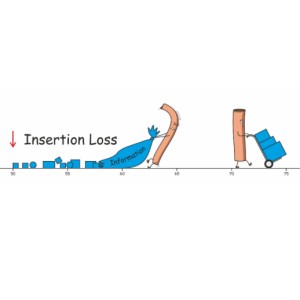
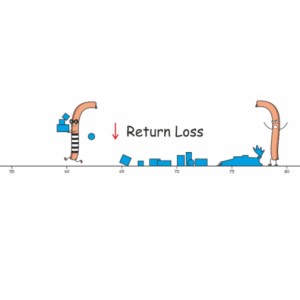
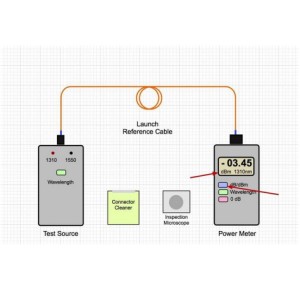
- Optical testing: Measures insertion loss and return loss.
Use the checks required for your assembly rather than judging success by appearance alone.
When trialing a new film, document the equipment settings, pad, fluid and number of uses. Keep those conditions controlled so the results can be compared meaningfully.
Also prevent contamination between stages. Coarse abrasive carried onto a finishing film can introduce scratches. Follow the specified cleaning method and replacement guidance; there is no single reuse count that applies to every polishing film.
Build the Specification Before Buying
A useful purchase request includes the connector type, ferrule material, polishing stage, abrasive, grit size, film dimensions and backing requirement. Add the machine, pad and current process details when asking for an alternative.
Fiber-Life’s Fiber Polishing Films category provides options to compare against those requirements. If you are changing consumables or establishing a new process, request compatibility guidance and a trial quantity first.
The right film is the one that meets your connector requirements under a verified process—not simply the one with the finest micron rating.