FREE SHIPPING On Orders Over US$200
A stronger optical signal is not always better. If too much light reaches a fiber optic receiver, it can exceed the receiver’s operating range. An optical attenuator reduces that power—but should you choose Fixed optical attenuator or Variable Optical Attenuator?
Start with a simple question: do you need one attenuation setting for everyday use, or several settings for testing and adjustment?
1. Understand the Main Difference
A fixed optical attenuator provides a preset amount of attenuation. For example, a 5 dB model is designed to reduce optical power by approximately 5 dB, within its specified tolerance.
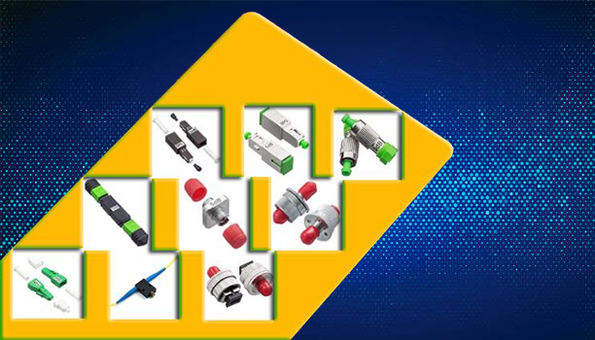
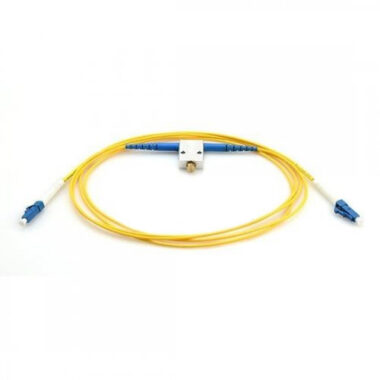
A variable optical attenuator, or VOA, lets you change the attenuation within a defined range. Think of it as an adjustable control for optical power rather than a single preset level.
| What matters | Fixed optical attenuator | Variable optical attenuator |
|---|---|---|
| Attenuation setting | One preset value | Adjustable within a specified range |
| Changing the value | Replace the component | Adjust the device |
| Typical use | Stable, permanent connections | Testing, setup and adjustable power control |
| Operation | No adjustment needed | Manual or electronic, depending on the model |
| Main benefit | Simplicity | Flexibility |
Both reduce optical power. The useful difference is how often you expect to change the setting.
2. Choose Fixed for a Connection That Stays the Same
Imagine a fiber link that has already been tested. The equipment and cable route are unlikely to change, and you know how much the received power needs to be reduced.
In this situation, a fixed attenuator is often the straightforward choice. Select the required attenuation value and a compatible interface, install it, and verify the received power.
For an LC/APC singlemode connection, an LC/APC fixed fiber optic attenuator is one option to consider. Its connector format must match the equipment, while its attenuation value must match the link’s power requirements.
The trade-off is flexibility. If the required attenuation changes later, you will normally need a different fixed attenuator. That is not necessarily a disadvantage for a stable installation, but it can become inconvenient during repeated testing.
3. Choose Variable When You Need to Adjust
Now imagine testing how a receiver performs as the incoming signal becomes weaker. You need to try several power levels, not just one.
A VOA lets you make those changes without replacing a fixed attenuator each time. It is useful for receiver testing, laboratory work and initial system setup.
For occasional adjustments, a manual VOA may be sufficient. Automated testing may require an electronically controlled model and a compatible controller. “Variable” does not automatically mean remote-controlled or self-adjusting.
Fiber-Life’s variable optical attenuator range includes options for different fiber types and operating wavelengths. Choose according to the adjustment method and optical specifications you actually need.
If you want to explore the mechanisms behind these devices, see How Does a Variable Optical Attenuator Work?.
4. Choose the Attenuation Level Without Guessing
Whether you select fixed or variable attenuation, the aim is the same: keep the received power within the equipment’s supported range.
The dB label describes how much power an attenuator reduces. A higher dB value means greater reduction—it does not mean a better product.
You do not need a complicated calculation to understand the selection process. First, check the receiver’s permitted input range. Then measure the incoming optical power with suitable equipment and determine how much reduction is needed.
If the required value is uncertain, a VOA can help during setup, but its setting still needs to be checked with a measurement. It cannot identify the correct level by itself.
After installation, verify the result. Too little attenuation may leave the receiver overloaded; too much may make the signal too weak. Also allow for expected power variation rather than setting the signal right at an operating limit.
5. Check Compatibility Before Ordering
Once you know whether you need fixed or adjustable attenuation, focus on a few practical details:
- Wavelength and fiber type: Match the attenuator to the system. A singlemode product is not automatically suitable for a multimode connection.
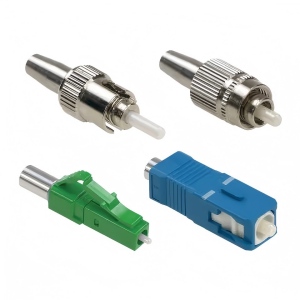
- Connector and polish: Check both the interface, such as LC, SC or FC, and the polish type. Do not directly mate UPC and APC connectors.
- Attenuation value or range: A fixed model needs the appropriate preset value. A VOA must cover all the settings you plan to use.
- Power rating and accuracy: Confirm that the device can handle the incoming optical power and that its stated tolerance suits the application.
For a VOA, also check how much loss remains at its lowest setting. Turning it down to minimum does not necessarily make it a loss-free connection.
If ordering details are unclear, provide the supplier with the operating wavelength, fiber type, connector format and measured power levels. Those details are more useful than asking for the “best” attenuator.
Conclusion
Choose a fixed optical attenuator when the required attenuation is known and unlikely to change. Choose a VOA when testing or operation calls for adjustable optical power.
Neither is automatically better. The right choice is the one that matches your workflow and keeps the received signal within the equipment’s specified range.