FREE SHIPPING On Orders Over US$200
In an era where a millisecond of latency can cost millions and downtime is measured in dollars per second, the physical layer of your network deserves more attention than it gets. Enter the fiber patch cable—a deceptively simple component that sits at the heart of nearly every high-performance network on the planet. Far more than just a “cord,” the right fiber patch cable can be the difference between a bottlenecked system and a future-proof infrastructure.
This article breaks down what fiber patch cables actually are, why they outperform copper at every meaningful metric, and how to choose the right type for your environment.
What Exactly Is a Fiber Patch Cable?
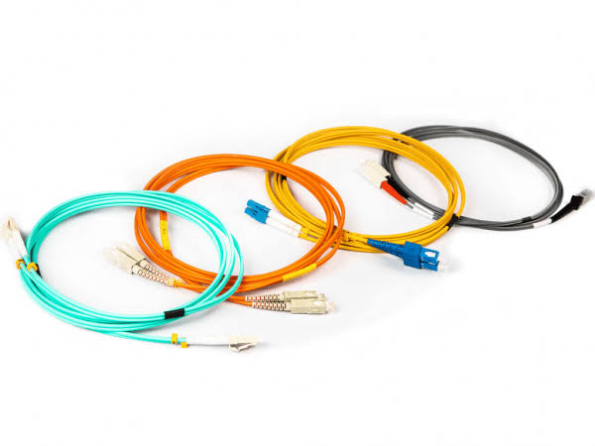
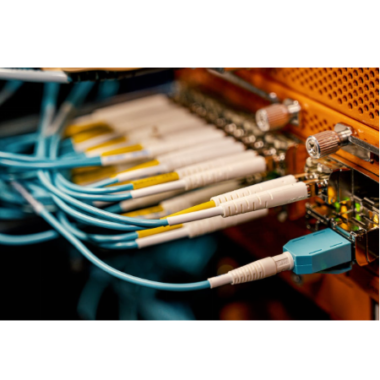
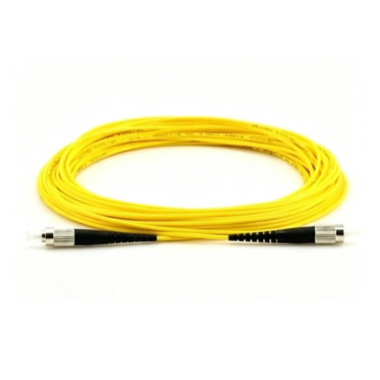
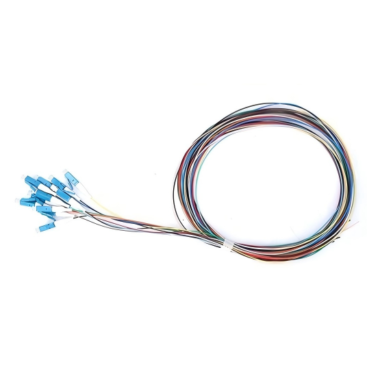
A fiber patch cable (or fiber optic patch cord) is a length of optical fiber terminated with connectors on both ends, designed to bridge hardware ports—think switches to servers, patch panels to routers, or transceivers to distribution frames.
Unlike copper cables that push electrons through metal, fiber patch cables transmit data as pulses of light through ultra-pure glass or plastic fibers. This fundamental difference unlocks performance characteristics that copper simply cannot match:
| Metric | Fiber Patch Cable | Copper (Cat 6A/7) |
|---|---|---|
| Max Data Rate | Up to 400 Gbps (and climbing) | 10 Gbps |
| Max Distance | 80 km+ (single-mode) | 100 meters |
| Signal Loss | ~0.2 dB/km | ~10 dB/100m |
| EMI Immunity | Complete | Vulnerable |
| Latency | ~3.33 μs/km | Higher, variable |
Why Fiber Wins: Four Technical Advantages
1. Bandwidth That Scales with Your Ambitions
Fiber does not face the same physical bandwidth ceiling as copper. While Cat 6A struggles to maintain 10 Gbps beyond 100 meters, a single OM4 multimode fiber can carry 100 Gbps up to 150 meters using parallel optics, and single-mode fiber (OS2) can push 400 Gbps across kilometers. For hyperscale data centers and 5G backhaul networks, this scalability is non-negotiable.
2. Near-Zero Signal Attenuation
Copper signals degrade rapidly with distance due to electrical resistance and crosstalk. In contrast, single-mode fiber exhibits attenuation as low as 0.2 dB per kilometer at 1550 nm. This means you can run a fiber patch cable across a campus or between buildings without signal regeneration—something impossible with copper.
3. Absolute Immunity to EMI and RFI
Data centers, manufacturing floors, and medical imaging suites are awash in electromagnetic noise. Copper cables act like antennas, picking up interference that corrupts data packets and forces retransmissions. Fiber, being dielectric, is completely immune to electromagnetic interference (EMI) and radio frequency interference (RFI). It also eliminates ground loops, a common source of equipment damage.
4. Physical Durability and Security
Modern fiber patch cables use bend-insensitive fiber (e.g., ITU-T G.657.A1) that can tolerate tight-radius bends without significant loss. Additionally, fiber does not radiate signals, making it inherently more secure against tapping—an often-overlooked advantage in financial and government networks.
Choosing the Right Fiber Patch Cable: A Practical Guide
Not all fiber patch cables are created equal. Selecting the wrong type can create costly bottlenecks or compatibility headaches.
Single-Mode vs. Multimode
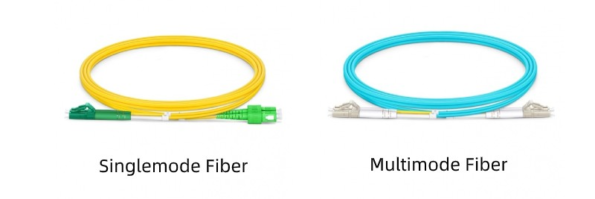
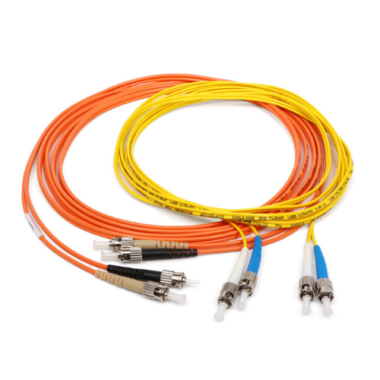
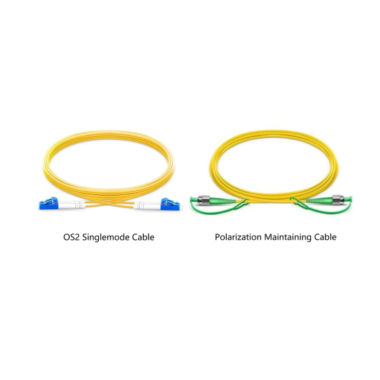
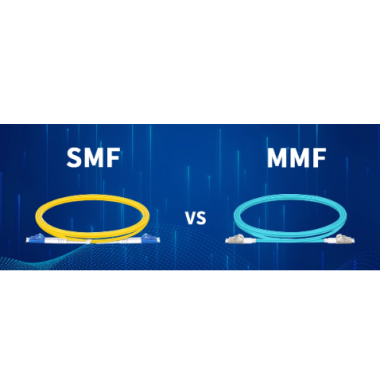
- Single-Mode (OS2, yellow jacket): Uses a 9 µm core and laser light sources. Ideal for long-haul connections (up to 10 km+), WAN links, and telecom backbones. Higher upfront cost, but lower cost per gigabit over distance.
- Multimode (OM3/OM4/OM5, aqua or lime green jacket): Uses a 50 µm or 62.5 µm core with LED or VCSEL sources. Best for short-reach applications inside data centers (up to 550 meters). OM5 supports SWDM (Short-Wavelength Division Multiplexing), enabling four wavelengths on a single fiber for emerging 100G/400G standards.
Connector Types
| Connector | Best For | Key Trait |
|---|---|---|
| LC | High-density data centers | Small form factor, latch mechanism, most common for SFP/SFP+ |
| SC | Telecom and GPON networks | Push-pull design, robust and reliable |
| ST | Industrial and legacy systems | Bayonet twist-lock, vibration-resistant |
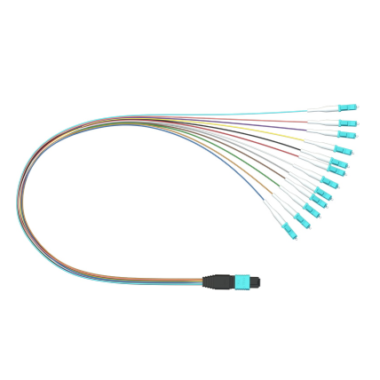
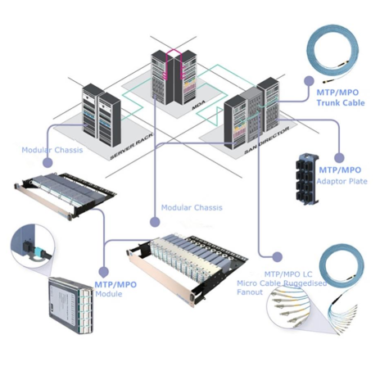
| MPO/MTP | 40G/100G/400G parallel optics | 8, 12, or 24 fibers in one connector, essential for trunk cables |
Jacket and Construction
- PVC: General indoor use, cost-effective.
- LSZH (Low Smoke Zero Halogen): Required in enclosed spaces; emits minimal toxic smoke if burned.
- Armored: Steel or Kevlar reinforcement for rodent-prone or high-traffic areas.
- Bend-Insensitive: Critical for dense patch panels where cable management space is tight.
Real-World Impact: Where Fiber Patch Cables Make the Difference
Hyperscale Data Centers
In facilities housing 100,000+ servers, fiber patch cables form the “nervous system” connecting Top-of-Rack (ToR) switches to spine routers. The shift from 10G to 100G/400G Ethernet has made MPO trunk cables and LC duplex jumpers the standard. A single mis-polarized MPO cable can drop an entire rack’s throughput to zero—precision matters.
Healthcare and Medical Imaging
A modern MRI or CT scanner generates gigabytes of data per patient. Fiber patch cables transmit these massive DICOM files to PACS servers in seconds, with zero risk of EMI corrupting diagnostic images. In surgical suites, fiber’s electrical isolation also enhances patient safety.
Broadcast and Pro AV
4K/8K video over IP (SMPTE 2110) demands sustained 10G+ streams with microsecond-level synchronization. Fiber patch cables deliver this with the headroom needed for uncompressed workflows—something copper-based SDI or HDMI cannot achieve beyond 100 meters.
5G and Edge Computing
5G small cells and edge data centers rely on fiber for fronthaul and backhaul. The low latency and weather-resistant outdoor-rated fiber patch cables ensure that user-facing applications—from autonomous vehicles to AR/VR—receive sub-10ms response times.
Conclusion: Invest at the Physical Layer
Network architects often obsess over protocols, virtualization, and cloud orchestration while treating patch cables as an afterthought. That is a mistake. A fiberlife fiber patch cable is not merely a connection—it is a performance decision. Choosing the correct fiber type, connector, and construction for your environment eliminates bottlenecks before they happen, future-proofs your infrastructure for 400G+ standards, and slashes long-term maintenance costs.
The question is no longer whether to deploy fiber patch cables, but whether your current selection is optimized for the workloads of tomorrow.